
Welcome to the Exten.(D.T.)² Guidelines! This document is designed to help teachers, researchers, administrators, and other stakeholders successfully plan, implement, and evaluate Design Thinking (DT) initiatives enriched by Emerging Technologies (ET).
Whether you are new to design thinking or already experienced, these materials below will help you ensure inclusivity, ethical data practices, robust teacher professional development, and effective integration of advanced digital tools in your educational or research contexts.
💡Note: Any texts below appearing with icons are hyperlinks to help you jump directly to the relevant sections or resources within this document.
To support various user needs, we have organized the content into three main sections:
Navigation Guide – Offers step-by-step instructions on how to approach and make the most of the guidelines.
Full Collection of Guidelines [v2] – The complete, detailed guidelines, including Components (Section 1), Perspectives (Section 2), and Competencies (Section 3).
Quick-Reference Checklist – A succinct, item-by-item guide aligned with the same structure as the main guidelines.
You can loop back to the Quick-Reference Checklist or Navigation Guide anytime to ensure you’re covering each crucial step. Remember: design thinking is iterative, so these guidelines are not linear instructions but an ecosystem of best practices you can revisit as your DT with ET project evolves.
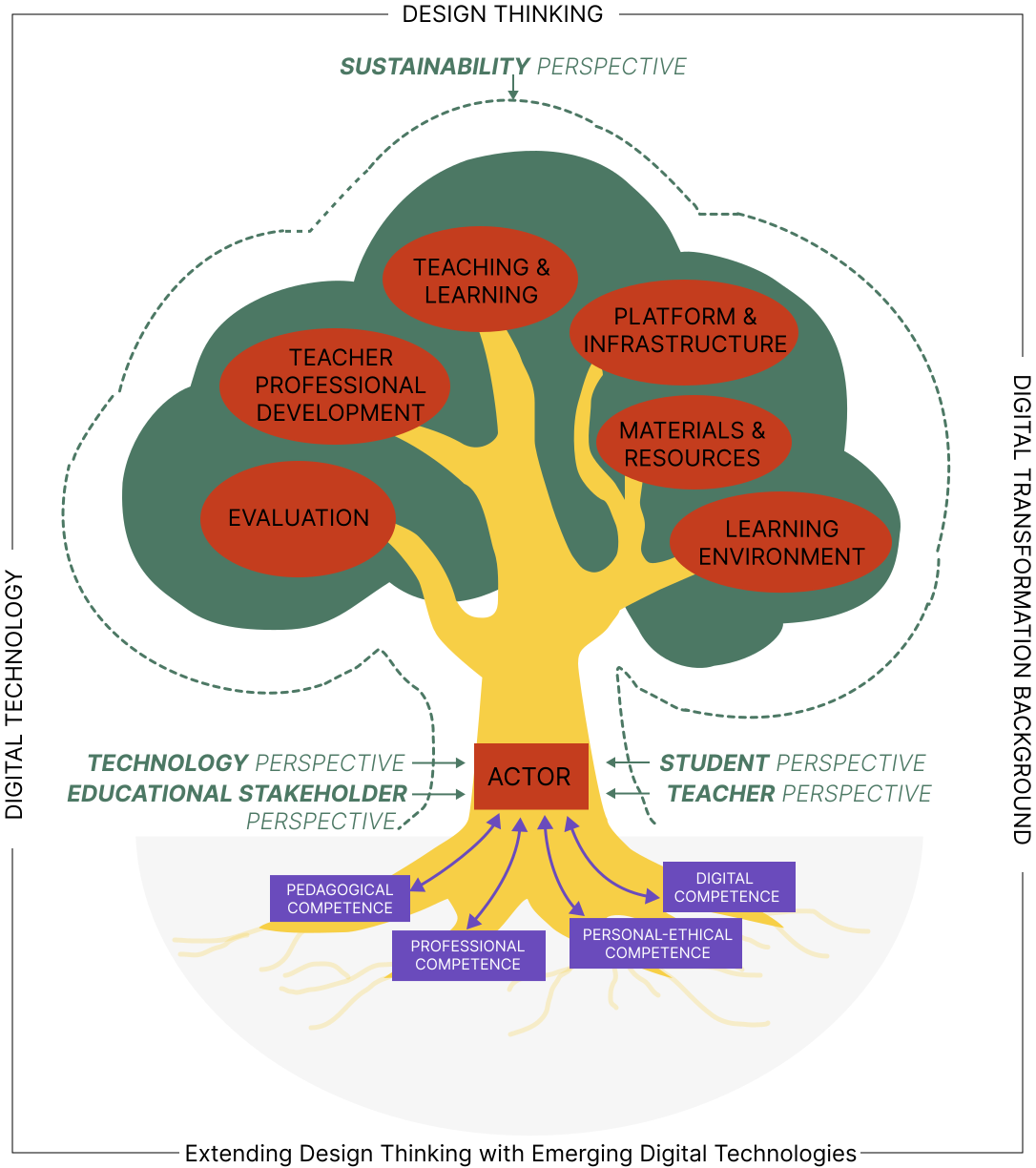
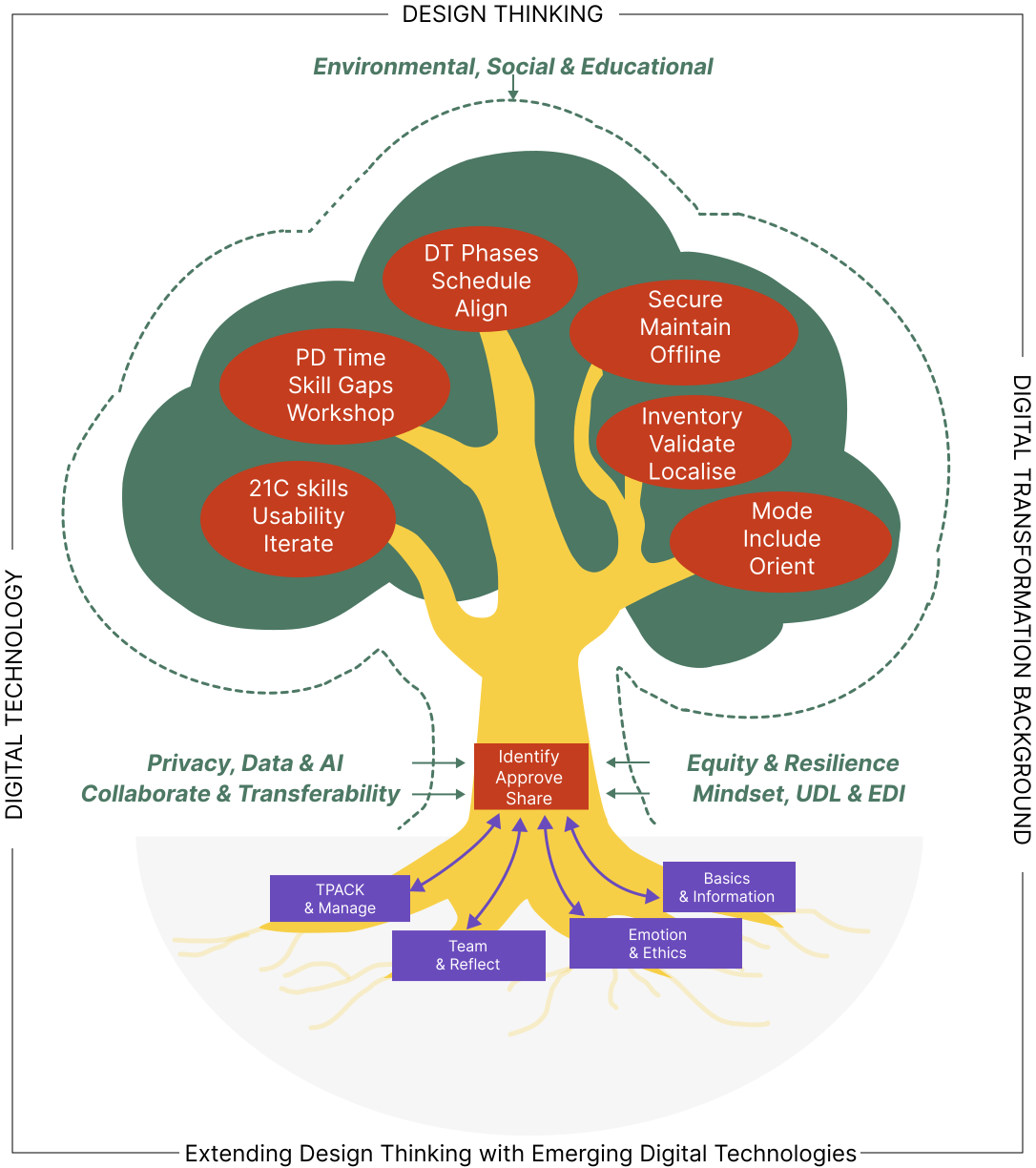
The figure illustrates the final version of the Exten.(D.T.)² Framework [V2] (Deliverable 2.2), which uses a tree metaphor to symbolize the various aspects involved in supporting Design Thinking (DT) with Emerging Technologies (ET). The image is interactive: when hovered, it reveals further details about the tree’s components.
For the tree:
The Exten.(D.T.)² Framework [V2] consolidates the key components, perspectives, and competencies necessary to support Design Thinking (DT) with Emerging Technologies (ET). You can explore the Guidelines here. Guidelines for the components are organized into seven categories, those for the perspectives into five categories, and those for the competencies into four categories, based on a comparison of findings from the reviewed literature and a participatory workshop. This approach aims to establish a strong foundation for future development, both in practical applications and in theoretical understanding.
Click here to access the previous version of our Guidelines! (link to access the V1 Guidelines)
